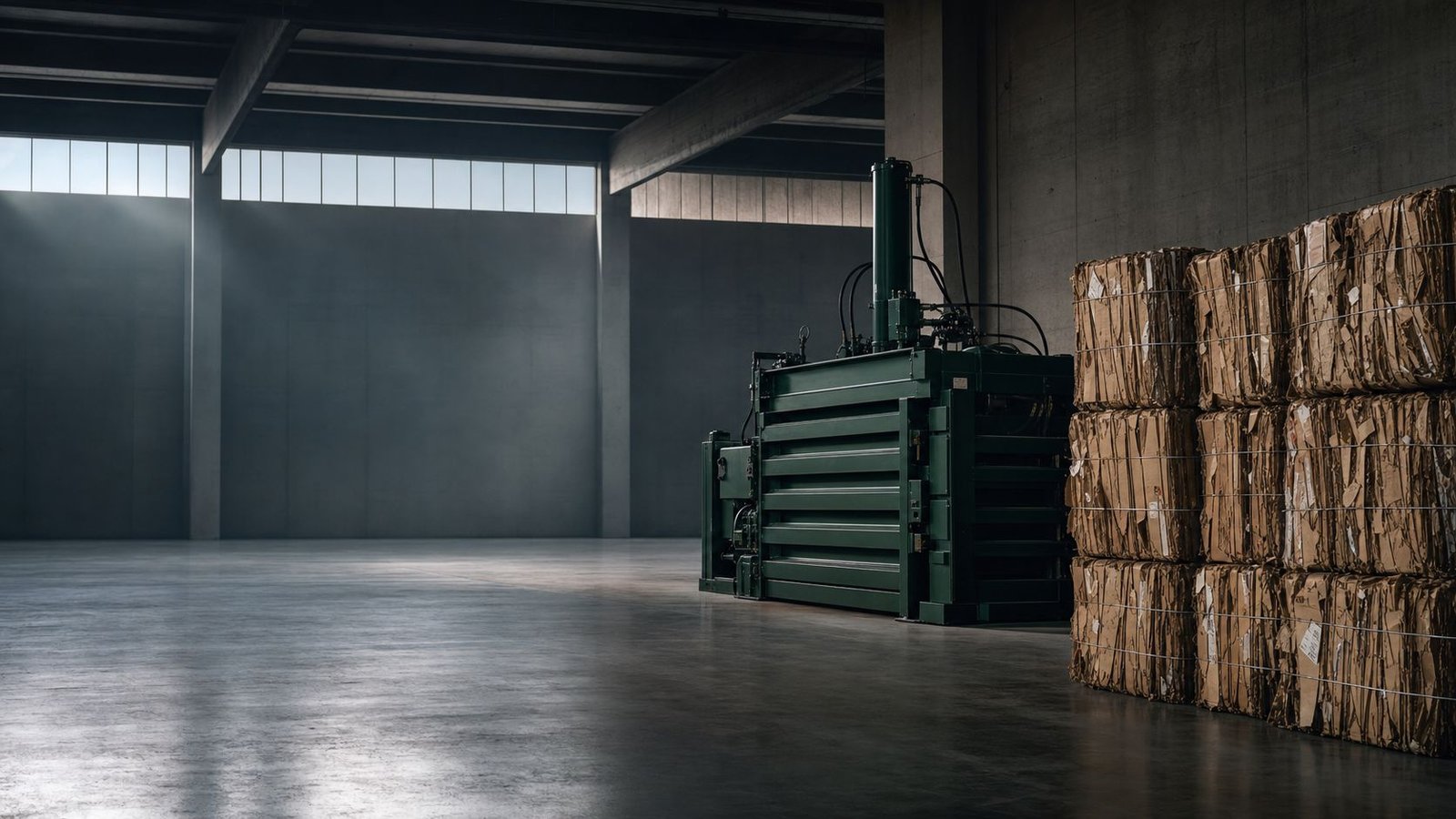
Less waste.
Fewer pickups.More value.
For more than 80 years, this family-owned company has helped operations across the country compact more, haul less and get more out of the material they were already throwing away.
- In business
- 80+ years
- Ownership
- Family-owned
- Equipment
- Balers & compactors
- Coverage
- Nationwide
Your waste operation could be costing more than you think.
Most companies ask what a baler or compactor costs. The more useful question is what the current process costs — every week, in pickups, in container rental, in floor space, and in the hours your people spend moving material by hand.
Without compaction
- Containers fill with air as much as material, so you pay to haul volume rather than weight.
- Pickup frequency is driven by how fast the container fills, not by how much waste you actually generate.
- Loose cardboard is handled repeatedly — flattened, carried, restacked, and often walked out one load at a time.
- Recyclable material leaves the building as waste you pay to remove.
- Overflow becomes a housekeeping and safety issue in the back room and on the dock.
With the right equipment
- Volume is reduced at the source, so each haul carries more material.
- Pickup frequency can potentially be reduced, depending on your current hauling agreement.
- Cardboard is consolidated into stackable bales instead of being handled loose.
- Recovered material may carry commodity value rather than a disposal cost.
- The back room stays clear, which makes the whole operation easier to run.
Outcomes vary. Whether pickup frequency can actually be reduced depends on your hauling contract, container configuration, service minimums and waste composition.
Start with your own numbers.
Move the inputs to match your operation. The result is an illustrative estimate built from your figures — not a quote, and not a promise. It is a starting point for a real conversation.
Compact more. Haul less.
Compaction changes one variable — density — and that single change moves everything downstream.
Waste
Material is generated across your operation and lands in a container.
Compact
Volume is reduced at the source. General waste compactors are commonly cited at 4:1 to 5:1.
Fewer pickups
Each container holds more, so it fills more slowly and may be pulled less often.
Less transportation
Fewer trips means less fuel burned and fewer heavy vehicle miles for the same waste.
And cardboard does not have to leave as waste at all.
Cardboard
Corrugated boxes were the largest single product category in U.S. municipal solid waste — 11.4% of total generation.
Bale
A baler compresses loose boxes into dense, wire-tied bales that stack and store.
Collect
Bales are collected by a buyer or recycler instead of a waste hauler.
Recycle
The fiber re-enters the supply chain. The recycling rate for corrugated boxes reached 96.5%.
New material
Recovered fiber becomes new containerboard, and the loop closes.
The environmental case is the same as the operating case.
Every pickup you avoid is a truck that does not run. That is not a marketing claim — it is arithmetic, and the underlying numbers are published by federal agencies and industry bodies.
Typical refuse truck fuel economy — the lowest of any highway vehicle category, per SWANA.
Diesel consumed per refuse truck per year, per SCS Engineers and Energy Vision.
Share of total U.S. municipal solid waste generation made up of corrugated boxes — the largest single product category (EPA, most recent published data, 2018).
Corrugated box recycling rate, up from 67.3% in 2000 — the highest of any packaging category (EPA, 2018).
EPA's most recent comprehensive Facts and Figures dataset covers calendar year 2018. Figures are presented as published and are not adjusted or projected forward.
Two categories. One question underneath.
Are you trying to recover material, or reduce volume? That single distinction drives almost every equipment decision that follows.
Balers
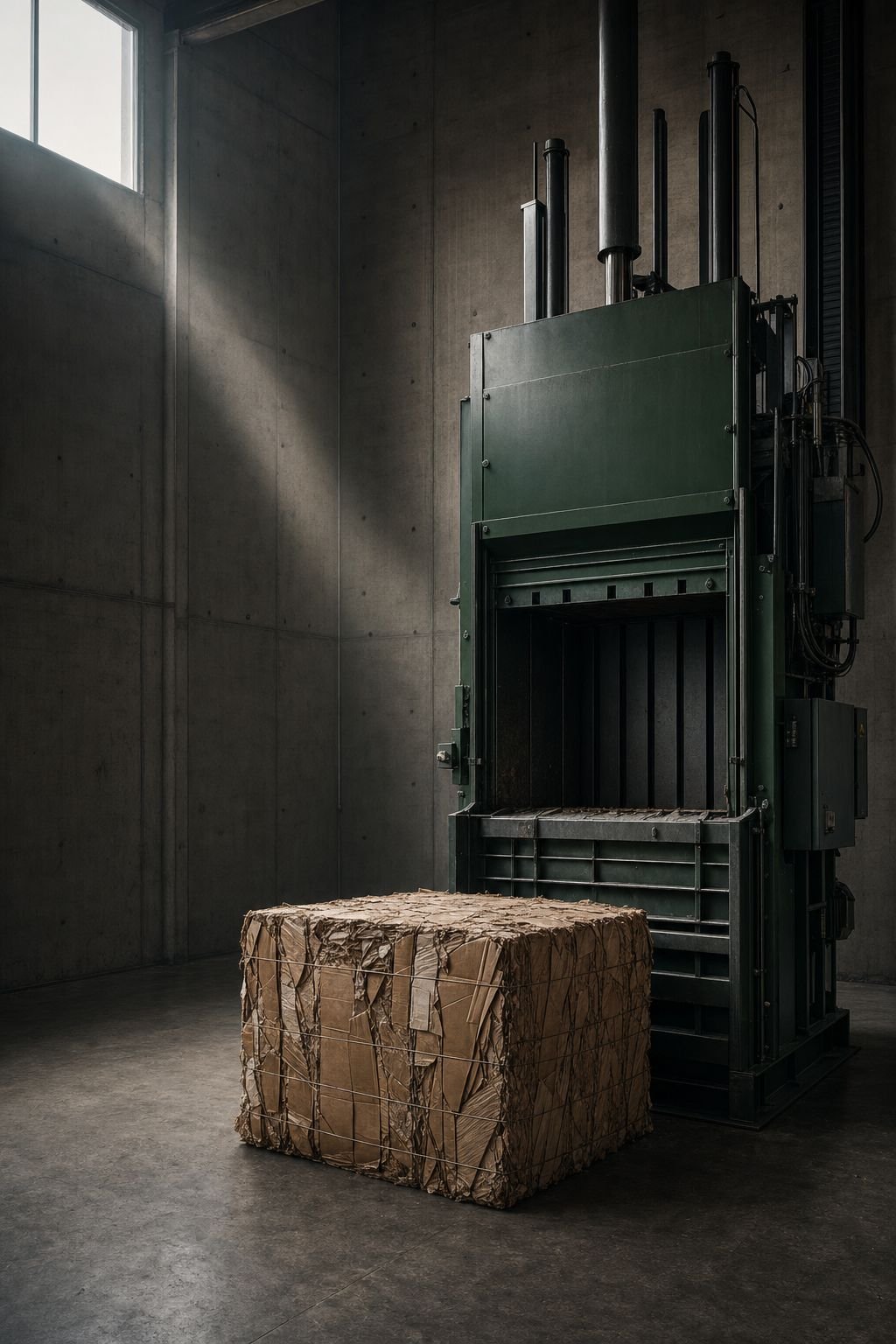
Compress cardboard, plastic film and other recyclables into dense, wire-tied bales that can be sold or collected rather than thrown away.
Explore balers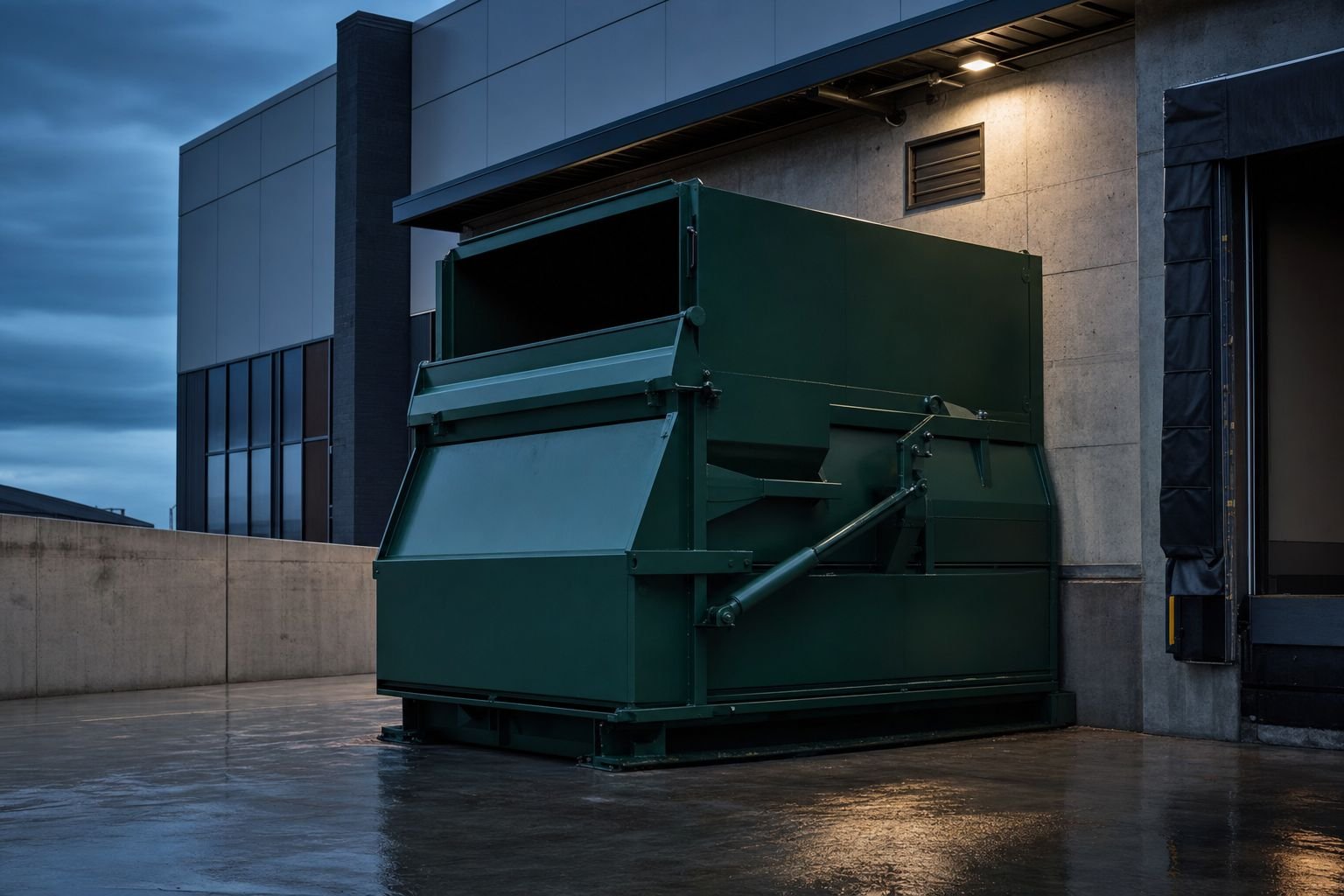
Compactors
Reduce the volume of general waste at the source so each haul carries more material and containers fill more slowly.
Explore compactors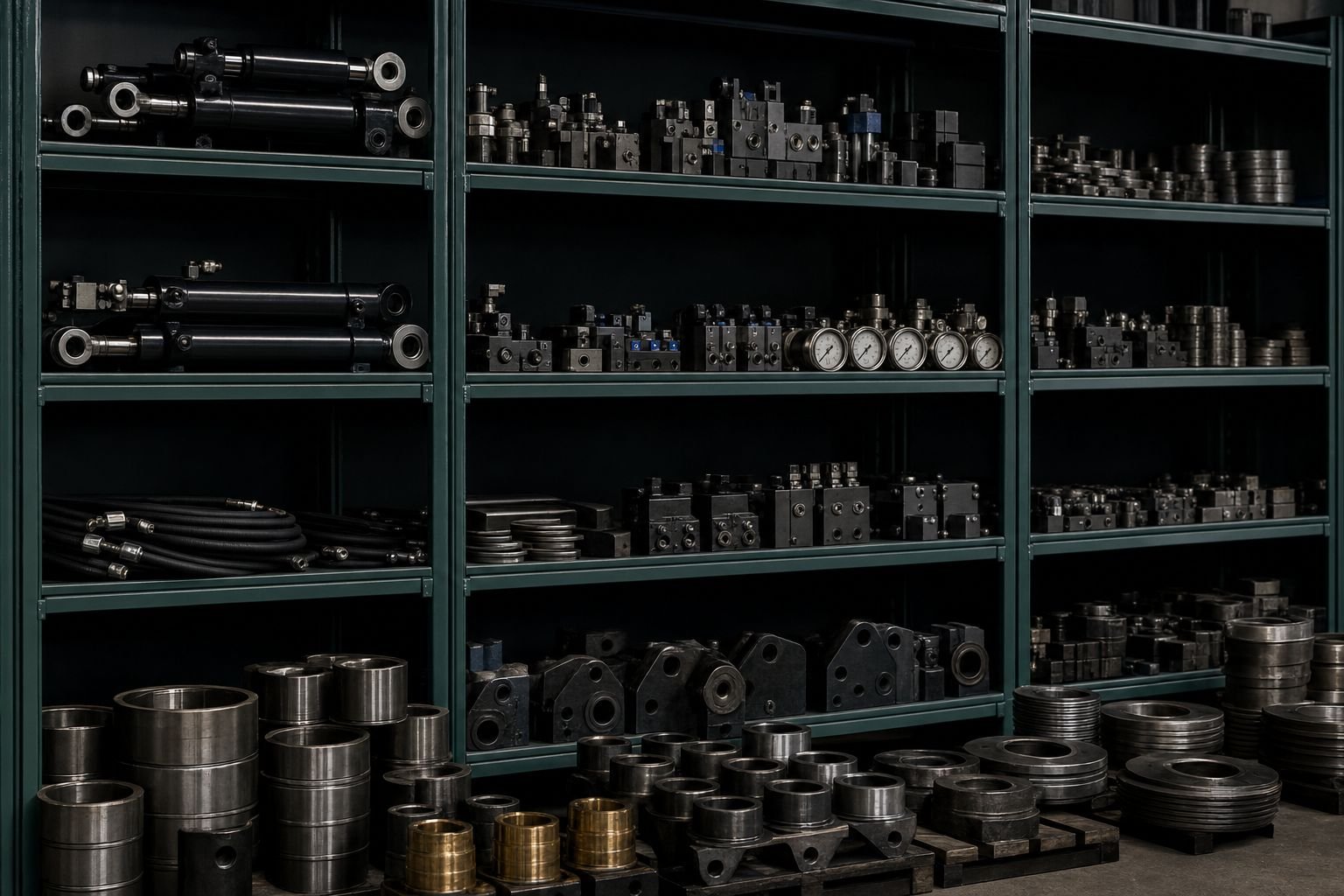
Other equipment & parts
Containers, chutes, carts, controls and the wear parts that keep installed equipment running year after year.
Explore partsMore than equipment.
Anyone can sell you a machine. The value shows up over the years that follow — in whether it was the right machine for your material, whether it was installed properly, and whether it is running on the morning you need it most.
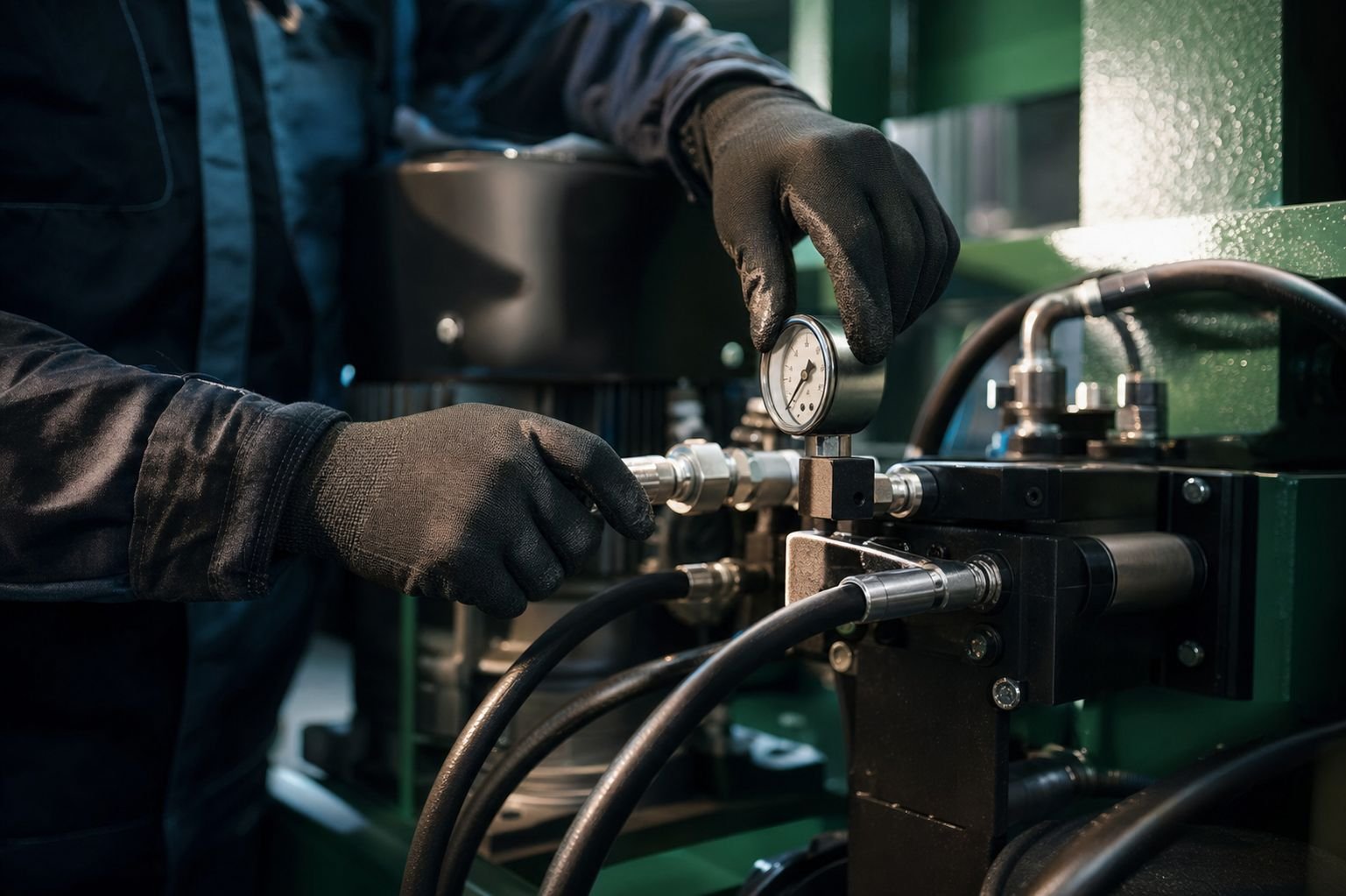
Your equipment is only valuable when it's working.
Consult
We start with your material, your volumes, your space and your hauling agreement — not with a product catalog.
Select
Equipment is matched to the waste stream and the site. Oversized machines waste capital; undersized machines create new problems.
Install
Delivery, placement, power, and commissioning handled as one coordinated job, with your operating hours in mind.
Operate
Your team is shown how to run the equipment correctly and safely, because most avoidable damage starts with loading habits.
Maintain
Scheduled maintenance to catch hydraulic, electrical and wear issues while they are still small and inexpensive.
Service
Repairs and parts when something does go wrong, because downtime is the real cost of waste equipment.
Optimize
As volumes, formats and store counts change, the configuration should change with them. We revisit rather than assume.
Different operations. Different constraints.
A grocery back room and a distribution center have almost nothing in common except that both are paying to move air.
Grocery & food retail
High cardboard volume, tight back rooms, constant deliveries, and staff time that is always in demand.
Read moreRetail & big box
Seasonal peaks, multi-site consistency, and stockrooms that were never designed for the volume they receive.
Read moreWarehouse & distribution
Throughput above all. Material handling has to keep pace with inbound and outbound flow.
Read moreManufacturing
Consistent, predictable process waste — often the easiest stream to recover value from.
Read more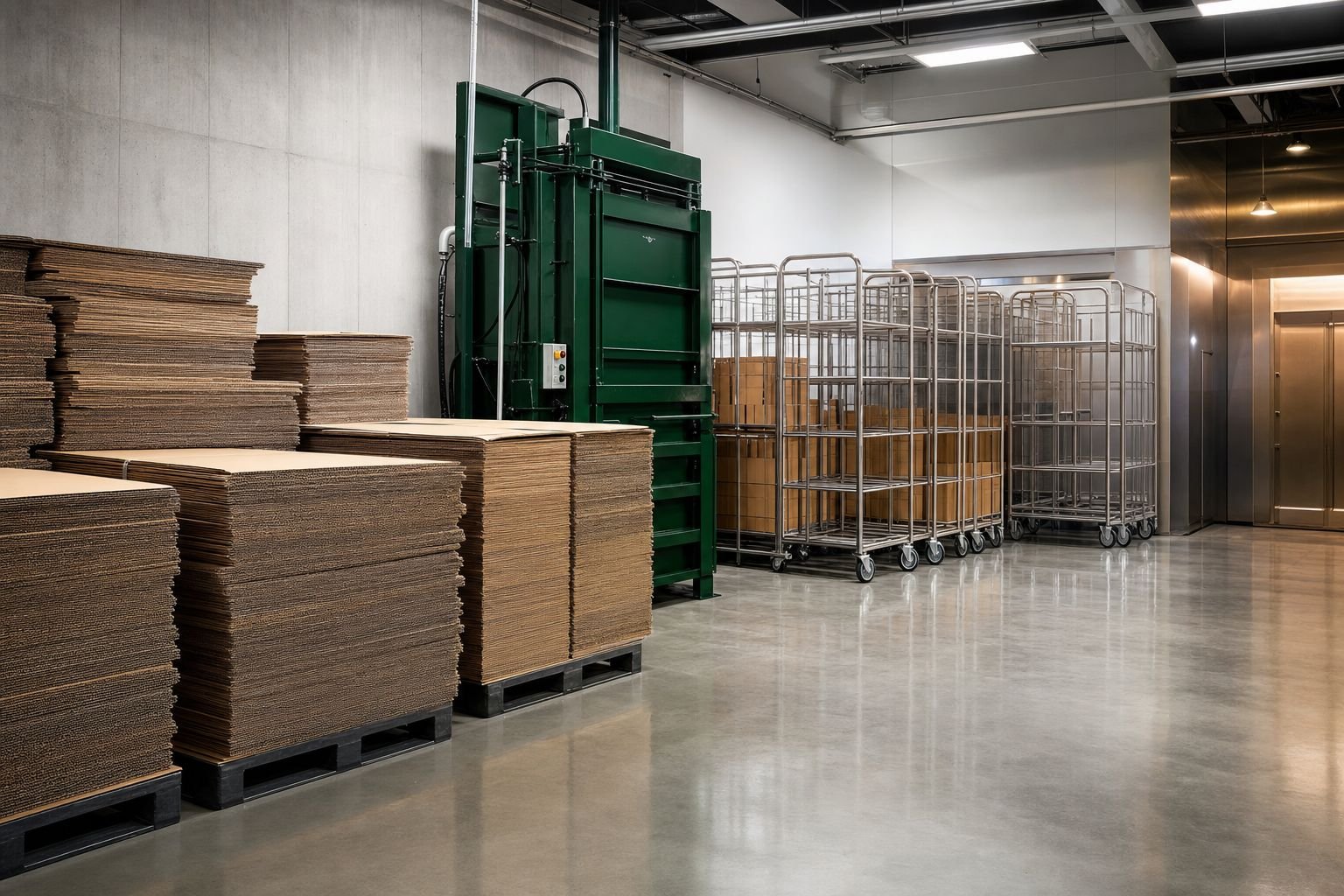
The back room tells you everything.
Deliveries arrive all day. Boxes are broken down between other tasks. The cardboard container fills before the week does, and someone calls for an extra pull. None of it shows up as a line item called "waste handling" — it shows up as labor, as clutter, and as a hauling invoice nobody has read closely in years.
That is usually where a baler pays for itself first: not in commodity checks, but in reclaimed time and floor space.
Nearly 80 years of experience. Built for the next 80.
Nichols Sales has been a family-owned business for more than 80 years. That longevity is not nostalgia — it is the reason customers can call about a machine that was installed decades ago and reach people who know it.
Waste equipment is a long-horizon purchase. A baler bought this year may still be running in twenty. The company standing behind it should be around that long too.
Years in business as a family-owned company
Year Nichols was first listed in The Blue Book of building and construction suppliers
Southern California headquarters, serving customers across the country
Distribution, installation, repair, maintenance and parts under one roof
From California to customers across America.
Nichols Sales is headquartered in Pomona, California, and sells, installs and services equipment for customers across the country. Local enough to know your site. Broad enough to support multi-location operations.
Sold
Equipment specified and supplied for single sites and multi-location operations alike.
Installed
Delivery, placement, power and commissioning coordinated as one job rather than three separate vendors.
Serviced
Repair, scheduled maintenance and parts support for the equipment we install and for machines we did not sell.
Nichols to confirm the exact service-territory language for this section: which states or regions receive direct on-site service from Nichols technicians, and where service is delivered through partners. This page will state only what Nichols can stand behind.
Results, in customers' own numbers.
This section is intentionally empty. Nichols Sales will not publish invented case studies, borrowed statistics or anonymous quotes that sound good and prove nothing.
Each case study will follow one structure: the operation before, the problem in the customer's words, the equipment selected and why, what changed afterward, and the numbers the customer is willing to share and verify. Nichols to supply three to five candidate accounts, including permission to name them.
Named quotes carry weight; unattributed ones do not. Nichols to supply customer quotes with name, title, company and written permission to publish. Long-tenured accounts are the most valuable here.
Learn before you buy.
Most of what companies want to know about this equipment has nothing to do with brochures. It is about cost, sizing, safety and what happens after the install.
Baler or compactor?
How to tell which problem you actually have — material recovery or volume reduction.
ReadHow to size equipment
Why volume, space, power and loading method matter more than headline specifications.
ReadBaler safety & compliance
Operator training, lockout practice, and the OSHA guidance that applies to this equipment.
ReadLet's make your waste operation work harder.
Start with an estimate, or start with a conversation. Either way, bring a recent hauling invoice — it is usually the most informative document in the building.