

Balers
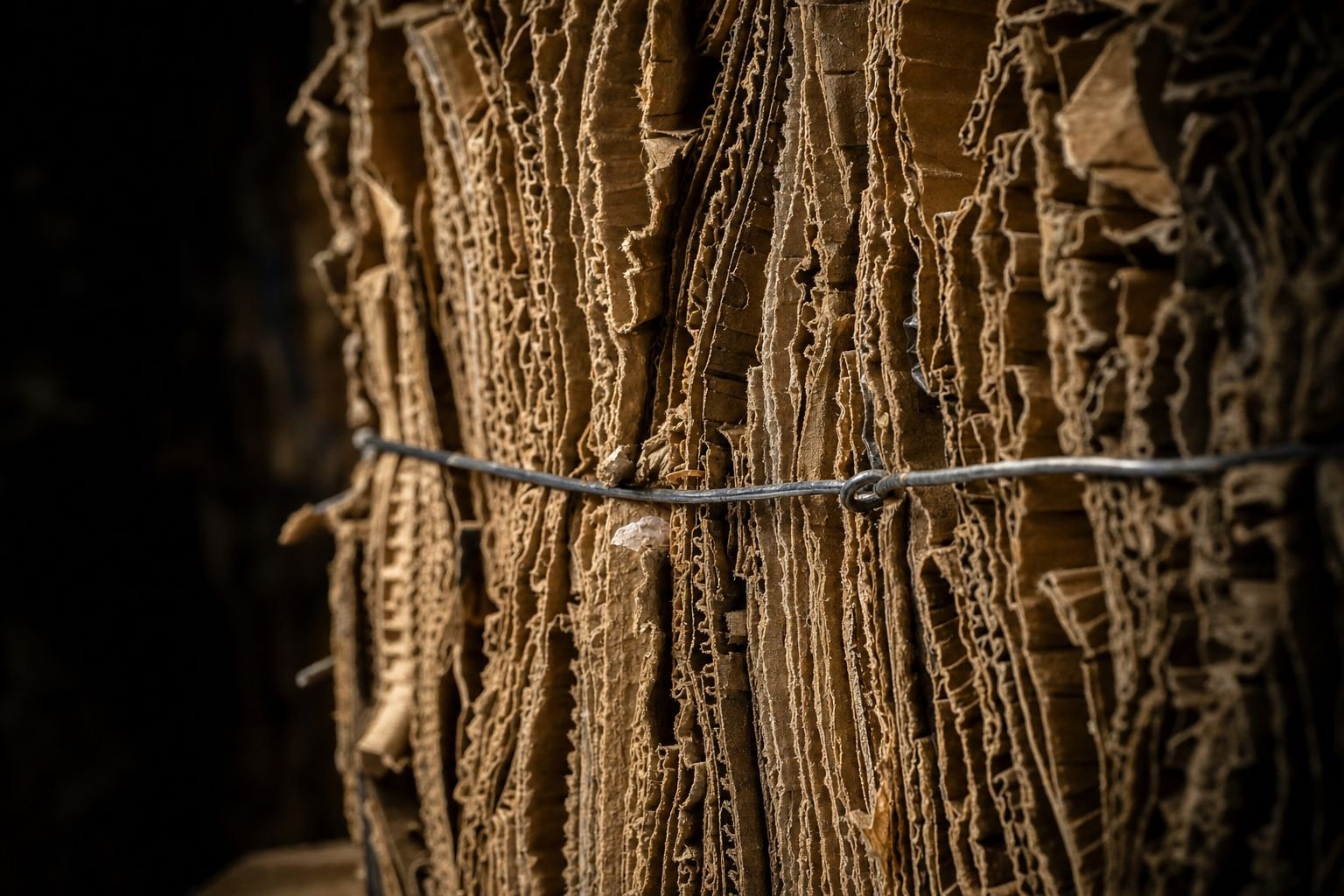
A baler turns the bulkiest thing in your building into the densest. Loose cardboard becomes a wire-tied bale that stacks, stores and, in most markets, sells.
Cardboard is mostly space.
A container of loose boxes is a container of air. That is why cardboard drives pickup frequency out of proportion to its weight — and why compressing it at the source has such an outsized effect on hauling.
Published compaction ratios for dedicated cardboard balers vary widely by machine type and press force. Vendor and industry sources commonly cite ranges from roughly 6:1 up to 10:1 or higher for high-density vertical balers on corrugated material. Ratios depend on the material, the machine and how it is loaded, so we treat them as ranges rather than promises.
The second effect is commercial. Baled corrugated is a traded commodity. Reported U.S. average prices moved between roughly $45 and $100 per ton across different indices during 2026, with Los Angeles quoted at $50 to $55 per ton in May 2026 (Fastmarkets, Packaging Dive). Nichols does not set those prices and does not build proposals that depend on them staying high.
Vertical, horizontal, and the honest difference.
Both produce bales. They suit very different operations, and choosing the wrong class of machine is the most expensive mistake in this category.
Vertical balers
The most common back-room machine. Staff load loose material through a front opening, a ram compresses downward, and a finished bale is tied and removed. Modest footprint, straightforward operation, and the usual starting point for retail, grocery and light distribution.
See specifications
| Best suited to | Back-room cardboard, film and mixed light recyclables at low to moderate volume |
|---|---|
| Loading | Manual, at floor level |
| Site considerations | Ceiling height, door and corridor clearance for both the machine and finished bales, electrical service, bale staging area |
| Bale handling | Typically moved by pallet jack or forklift |
| Model-level data | Capacities, bale dimensions, cycle times, press force and power requirements to be published once confirmed by Nichols |
Horizontal balers
For higher and more continuous volume. Material is fed from a conveyor, chute or floor-level hopper, and the machine bales with far less manual handling per ton. Heavier, mill-ready bales, more floor space, and a real installation plan.
See specifications
| Best suited to | Distribution centers, manufacturing, high-volume recycling operations |
|---|---|
| Loading | Conveyor, chute, hopper or cart tipper |
| Site considerations | Floor area and layout, foundation, power, infeed integration, outbound truck access |
| Bale handling | Forklift; bales are substantially heavier than vertical baler output |
| Model-level data | Throughput, bale weight, tie configuration and power requirements to be published once confirmed by Nichols |
Specification tables above describe selection criteria, not model specifications. Nichols will supply verified capacity, dimension and power data before this page goes live.
What actually determines the right baler.
Material and moisture
Dry corrugated behaves nothing like wet produce boxes or plastic film. Moisture affects density, bale integrity and machine wear.
Volume, and its peaks
Monthly tonnage matters less than the worst week. Equipment sized for the average becomes a bottleneck during a seasonal peak.
Space, in three dimensions
Floor footprint is the easy part. Ceiling height, door width and the path a finished bale takes out of the building are what usually rule options out.
Power available at the location
What is already at the wall often narrows the choice faster than any other factor.
Who loads it, and how often
A machine that fits the workflow gets used correctly. One that does not gets overloaded, jammed and damaged.
Where the bales go
Staging space, pickup arrangements and buyer requirements should be settled before the equipment is chosen, not after.
A baler is a serious machine.
Balers apply enormous force and must be operated and maintained accordingly. Federal safety guidance for this equipment is public, and operator training, guarding and lockout practice are not optional extras.
Nichols covers safe operation as part of installation and revisits it during scheduled maintenance. See OSHA's safety guidance on balers and compactors for the federal requirements that apply.
Nichols to confirm what safety and training deliverables are provided with an installation — operator training session, printed procedures, lockout/tagout guidance, annual inspection service — and whether any technician certifications should be listed here.
Let's confirm the right solution.
Four questions in the equipment finder will narrow the category. A short conversation will settle the rest.